Friday, October 22, 2010

Google to launch online music in India
Google Inc plans to launch an online music service in India that would enable users to search for legal music streams and downloads.

Google is looking to add music feature in its search service, which will allow users in India to search for songs.

The top search results would be from Google's partners. The U.S. web search giant will partner with three digital music providers, who hold rights to hundreds of thousands of Indian tracks ranging from Bollywood hits to Indian classical music.

Google could not immediately be reached for comment by Reuters outside regular U.S. business hours.

Thursday, October 21, 2010

Apple unveils iLife 11 and new MacBook Air
iLife 11A new MacBook Air, iLife 11, a sneak preview of Mac OS X Lion, and FaceTime for the Mac. Those are the new products announced by Apple CEO Steve Jobs at the company's headquarters.

Jobs also said that the Mac, not to be outdone by its younger iPod and iPhone siblings, will soon have its own application store.
The new Air uses solid-state flash storage instead of a hard drive, which the company said lightens an already lightweight laptop since solid state is as much as 90 percent smaller and lighter than a hard drive. At its thinnest point, the Air is 0.11 inches, and only 0.68 inches at its thickest.

The newest Air is available in 11.6- and 13.3-inch display models, features instant-on bootup, and has a battery life of up to 7 hours.

The latest iLife features a new look look for iPhoto, easier editing in iMovie, and new ways to improve music playing and creating in GarageBand. iLife 11 is included free in new Macs, or available as a $49 upgrade for existing users.

Sending photos to friends and family via iPhoto now includes a choice of eight themes, and the photos can be posted to Facebook with a single click. There's a new way to create books and cards using a carousel interface, intelligent book layout, and a bookshelf to keep track of projects. With new letterpress cards, photos and text can be combined with designs to create wedding invitations, birth announcements, and other announcements.

iMovie features 15 different genres such as Adventure, Romantic Comedy, or Epic Drama, each of which has its own graphics and soundtracks. A feature called People Finder analyzes video and marks clips that have faces to quickly create a trailer.
MacBook Air
The company also announced a public beta of FaceTime for Mac, which allows Mac users to video-call iPhone 4 and iPod touch users, or other Mac users. It automatically uses the Address Book contacts on the machine, so special buddy lists aren't needed, and it works with Macs' built-in cameras and mikes.

Apple provided a peek at the Lion. Mac OS X Lion is expected to ship in the summer of 2011, and the preview included LaunchPad for Mac apps, systemwide support for full-screen apps, Mission Control, and a look at the Mac Apps Store.

Jobs said Lion "brings many of the best ideas from iPad back to the Mac" and adds some new ones, such as Mission Control. Launchpad shows all available apps on the Mac, organized as desired. With Mission Control, a user can navigate through apps that are running.

As with an iPad, the Mac app store will allow users to find and download apps via an iTunes account. It will become available within 90 days for Macs running the Snow Leopard OS.

Wednesday, October 20, 2010

Samsung working on a joint platform for Cellphones and Televisions
SamsungSamsung Electronics is developing a joint software platform for use on its cellphones and televisions, hoping wider audience attracts more developers to use its products.

"We have a plan to have a single platform for Samsung TV and phones," said Kyungsik Kevin Lee, vice president at Samsung's Visual Display Division.

Lee said he could not estimate when the platform would be ready as developers were still working on it.

In addition to Samsung only its local rival LG Electronics and Japan's Sony Corp, through its handset venture Sony Ericsson, are in a position to combine the two audiences.

"There is a small number of companies positioned to do this, of course, and all have holes in their stories, whether geographically, in product terms, or in terms of engaging developer communities," said analyst John Jackson from research firm CCS Insight.

"The strategic premise is that by doing this you can position yourself to participate in the revenue streams generated by the services that run on your platform," Jackson said.

Samsung's Lee said the Korean firm expects its sales of smart TV's - high-end TV sets which can be used also for Internet access - to reach around 5 million sets this year, and to more than double in 2011.

Tuesday, October 19, 2010

Bill Gates' successor Ray Ozzie to retire
The Microsoft Corp executive, Ray Ozzie, who took over the role of chief software architect from Bill Gates is to step down, following a tenure in which the Windows-maker lost ground to Google and Apple.

Chief Executive Steve Ballmer said Ray Ozzie would not be replaced, raising questions about the leadership and direction of the world's largest software company after a string of high-profile departures.

Ozzie, who spearheaded Microsoft's move toward providing software and computing power over the Internet - known as "cloud computing" - had achieved what he set out to do, one person close to the executive said, although others questioned whether he had had ever had much impact.

"Ozzie leaving highlights that Microsoft has been kind of lost in the woods ever since Bill Gates left," said Toan Tran, an analyst at Morningstar. "They let Google solve search, they let Apple figure out smartphones, and Apple is in the process of figuring out non-Windows PC devices with the iPad."

He is the latest in a line of Microsoft executives to exit the company in the wake of Gates' retirement from day-to-day work at the company in 2008, following platforms and services chief Kevin Johnson, Chief Financial Officer Chris Liddell, phones and games chief Robbie Bach and Office unit head Stephen Elop.

It cements control of the company's direction under Ballmer, who said he did not need to replace Ozzie.

"We have a strong planning process, strong technical leaders in each business group and strong innovation heading to the market," said Ballmer in a memo to employees.

The 54 year old, Ozzie, who created the groundbreaking Lotus Notes email system early in his career, took on the role of overseeing Microsoft's software direction in 2006. His role became more visible after Gates's retirement.

He had made a splash at the company in 2005, shortly after he joined, with his now-famous "Internet Services Disruption" memo, which pushed Microsoft toward the Internet and cloud computing.

Some saw that as a challenge to Microsoft's core business of getting software installed on as many computers as possible, but the company now says it is "all in" for cloud computing, although it is still far from certain that Microsoft will ultimately realize the change of business model or benefit from it.

Ozzie's key project, the "Azure" platform for developing cloud-based applications, debuted this year to moderate success, and is now part of another unit, Microsoft's Server and Tools division.
The company is now extending beyond Azure, trying to grab a greater share of customers' tech spending by offering to handle their servers, data storage and other computing needs.

Ozzie cut a slightly detached figure at Microsoft, and never fully established himself as a force at the company's campus near Seattle, preferring to spend half his time at his home in Massachusetts.

The move signals a new focus on entertainment at the world's largest software company, where it has lost ground to Apple Inc and Google Inc recently.

According to a memo sent by Ballmer, Ozzie will focus on entertainment efforts at the company and retire after an unspecified time, which people familiar with the matter said would be a matter of months.

Ozzie's move could revitalize entertainment efforts at Microsoft. Its entertainment and devices unit, which includes the Xbox game system and the new Windows 7 phones, has been struggling to win consumers in areas like phones, TV software and tablets, where Apple and Google are charging ahead.

Friday, October 15, 2010

Wednesday, October 13, 2010

Sony unveils Google TV with web-surfing system
Sony Google TVSony's lineup of sleek televisions boasting Google's Web-surfing system will go on sale very soon, testing how much consumers are willing to pay to combine access to the entire Internet with their regular TV programming.

The high-definition sets unveiled recently will have LCD screens ranging from 24 inches to 46 inches, with recommended retail prices from $600 to $1,400. Sony will begin selling the new sets in its online store Saturday, and they should be available in Best Buy Co.'s US stores by early next week. Pre-orders are currently being taken at both Sony's and Best Buy's websites.

Sony's price for its Google TV sets is $200 to $400 higher than comparable TVs without the highly touted software.

The strong sales of Apple Inc's iPhone and iPad have demonstrated that people are still willing to open their wallets to buy breakthrough gadgets, but persuading them usually requires a snazzy marketing campaign that shows why the products are worth the extra money.

Forrester Research analyst James McQuivey said he isn't convinced that Sony and Google will be able to make a compelling enough case to turn this new generation of TVs into a must-have item, even though he is impressed with the technology inside the sets.

"Price is going to be important," he said. "Google TV is a powerful experience, but most people aren't going to understand it unless they can see it in action. And Google isn't known for its consumer marketing experience. I think they have the right concept here, but I am not sure about the execution yet."

Sony is planning a marketing blitz to promote its Google TV sets through the holiday shopping season, although the company isn't saying how much it will spend on the campaign. Google traditionally has refrained from buying TV ads, relying instead on its ubiquity on the Internet and the marketing acumen of its partners.

Like millions of mobile phones that have been sold in the past two years, Sony's new TVs will be built on Google’s Android operating system. They will navigate websites with Google's Chrome browser and rely on Intel Corp.'s Atom chips for their processing power. The system can comb through the Internet, television programming guides and even DVRs from satellite operator Dish Network Corp. to find all video connected to a request entered into a search bar at the top of the screen.

"Finally, you can seamlessly search your favorite TV programs and websites on the same screen, at the same time," said Mike Abary, senior vice president of Sony Corp.'s home division.
Sony Google TV Remote
The remote control for Sony's Google TVs includes a standard, "QWERTY" keyboard to enter the search requests or make other comments on the Internet while retaining the ability to watch TV simultaneously.

Logitech International SA has bundled the same Google TV package into a set-top box that can be plugged into existing TVs with HDMI sets. The Logitech boxes, already available for pre-order, are selling for $300, undercutting a similar box with a Blu-ray player that Sony is selling for $400.

Google TV devices will likely face their stiffest competition from an array of less-expensive boxes that also connect to popular Internet services such as movies from Netflix Inc. and songs from Pandora's music-streaming site.

But those enticements haven't been enough to get most people to buy Internet-connected boxes. McQuivey estimates that Apple has sold about 1 million of its set-top boxes so far. Roku Inc. has sold even fewer since it entered the market more than two years ago, McQuivey said, even though the price for its Internet player has fallen to $60.

Those relatively modest sales figures show how reluctant people have been to inject the Internet into the three to five hours they spend, on average, in the so-called "lean back" mode of watching television.

But that almost certainly will change as younger people who have grown up Web surfing on their computers while channel surfing on the TVs look for products that bring together the different media. The only question seems to be how much longer it will be until the market reaches the tipping point where Internet TV goes mainstream.

Sony's own research has identified consumers who are under 44 years old as the most likely buyers of the new Google TV sets. McQuivey thinks the market is probably even narrower than that right now, ranging mostly from people between 30 and 45 years old who have settled down into their own households and can afford fancy TVs.

Convinced the Internet TV will be the next big thing, other consumer electronics manufacturers such as Samsung Electronics, Vizio and Mitsubishi also are promoting Web-connected sets and Blu-ray players.

And after brushing off Internet TV as nothing but as "hobby" for years," Apple CEO Steve Jobs appears ready to get serious about the market. His company last month introduced a retooled set-top box that sells for just $99. The Apple TV product is still more limited than Google TV's system, but McQuivey said that may not matter to consumers who have come to love Apple's "prettier and shinier" gadgets.

There should be ample opportunity to convert more people to Internet TV, given that McQuivey expects about 22 million new TV sets to be sold in the U.S. next year.

Google Inc. CEO Eric Schmidt appears fairly certain a lot of them will be showing content from the Web. In a recent speech he said, "Instead of wasting time watching television, you can waste time watching the Internet.”
Apple getting serious about TV
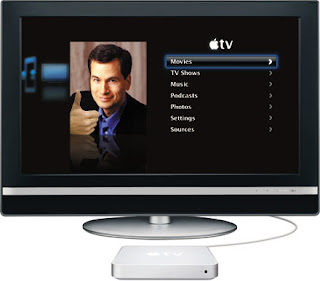
Apple TVThere's something mysterious about the new Apple TV - a black hockey puck-size box that connects to your hi-def set. It brings some entertaining stuff right now, and maybe a lot more comes down the line.

Apple has been nibbling around the edges of the living room for years with Apple TV, originally a set-top box that stored and played purchased movies. The new Apple TV has been shrunk to a quarter of its former size, the price has been slashed from $229 to $99, and it no longer includes a hard disk to store video. Apple TV is now built around its ability to use your home Wi-Fi network to stream high-definition movies and shows, photos, and music - from online sources or your computer - to your television.

Operating the device is easy. Connect it to your set via an HDMI cable and plug in the power. Then just follow the on-screen instructions to introduce it to your Wi-Fi network and iTunes Music Store account. Instead of using Apple TV's included remote control to key in your password letter by letter on the big screen, download Apple's free Remote app for your iPad, iPhone, or iPod Touch, and enter your text from there.

With no way to store purchased content on the new Apple TV, you'll probably use it mostly to view movies and shows rented from the iTune Store. The movie selection has thousands of HD titles starting at $3.99. The TV selection, however, is limited: The only major U.S. networks signed on to Apple's 99 cents-an-episode menu are Fox and ABC. Once you rent something, you have 30 days to start watching it, then 24 hours for movies or 48 hours for TV shows to finish. There are a few other programming sources. Netflix customers can get access to its Watch Instantly movies and TV shows straight from the device; and Apple TV can also tap into YouTube videos, podcasts, and Internet radio. It even makes it easy to view movies and photos stored on your computer.

Apple TV's 720p-quality video provides a consistently crisp, smooth picture, with none of the stuttering that sometimes mars streamed content.

This being Apple, more slick functions are on the way. After a software update promised for next month, you'll be able to stream video to the Apple TV from an iPad, iPhone, or iPod Touch. You can begin a movie on a mobile device, walk into your home, and have it appear on the big screen in your den.

Apple TV may turn out to be a Trojan Horse - a deceptively simple gadget that, once in the home, expands its functionality until it takes control of everything. Or it may prove to be the first step toward an Apple-branded television set.

The device allows users to stream movies, television shows, radio, music, and pictures over a Wi-Fi connection.

Thursday, October 7, 2010

Apple to make iPhones for CDMA networks
Apple IncAccording to a new report, Apple Inc. is getting ready to manufacture an iPhone that works on the cellular network operated by Verizon Wireless, though it doesn't necessarily mean it's coming to that carrier any time soon.

It has long been rumored that Verizon Wireless will eventually start selling the iPhone. But Lowell McAdam, the head of Verizon Wireless, has downplayed the possibility of an iPhone on Verizon's current 3G network. Verizon expects one to come later for Verizon's newer, faster 4G network.

The Wall Street Journal has briefed that the company will start mass-producing the iPhones that work on CDMA cellular networks by year's end.

But that wouldn't necessarily be for Verizon Wireless. Sprint Nextel Corp uses the same technology, as do some Chinese and Korean carriers.

Current iPhones only work on GSM networks, including that of the iPhone's exclusive U.S. carrier, AT&T Inc.

The Journal also said Apple is developing a fifth-generation iPhone. New iPhone designs, including ones with smaller and larger screens than the existing models, have also long been rumored to be in the works.

Wednesday, October 6, 2010

Motorola launches Droid Pro
Motorola Droid ProMotorola has introduced the Droid Pro, an Android smartphone aimed at the BlackBerry market, along with several other Android handsets.

With the Droid Pro, which is due to come out on Verizon Wireless next month, Motorola built in features designed to appeal to enterprise IT departments. Business users are open to giving up their BlackBerry devices if there is an alternative that meets their requirements, said Sanjay Jha, CEO of Motorola Mobilty, as he introduced the phone. Motorola's event took place as this week's CTIA Enterprise & Applications event got under way in San Francisco.

The Droid Pro features a built-in QWERTY keypad and a 3.1-inch touchscreen as well as a 5-megapixel camera. It allows users to both read and edit Microsoft Office documents. If the device is lost or stolen, an administrator can remotely wipe the data from both the phone and the removable MicroSD card in the phone. In the first quarter, Motorola will add the ability to encrypt all the data on the phone and the MicroSD card. In addition, administrators can mandate complex passwords and require regular password changes.

The phone is also designed for business travel, with radios for both CDMA and GSM networks, including their 3G variants. It runs the Android 2.2 operating system, also known as Froyo.

According to analysts, “The Droid Pro may not quite displace BlackBerrys in large enterprises, but it is a step in the right direction, especially with its security features. One missing piece it should have is the ability to track changes in Office documents.”

Motorola featured several other Android handsets designed for consumers at the event. The company did well to get into Android early when it launched both the original Droid and the Cliq approximately a year ago but the company now faces stiffer competition. Introducing a wide range of devices based on the hot mobile platform is a good strategy for the company.

"Motorola is bringing Android-based smartphones to all consumers," Jha said.

Jha hailed tiered data plans as one factor that will help to drive consumers' rapid embrace of smartphones. These plans, like ones introduced earlier this year by AT&T with the Apple iPad tablet, provide a range of plan prices with limited amounts of data allowed per month. These keep average consumers from having to shoulder the cost of the most active subscribers' heavy data use, making the cost of a data plan more palatable, he said.

"That will drive the democratization of wireless broadband access," Jha said. Critics have said tiered plans could inhibit subscribers' mobile Internet use and the development of new mobile applications.

As Android smartphones proliferate, they are falling in price and coming within reach of more consumers.

Motorola unveiled low-end Android phones at its own event, though as with the other introductions, the company left it to carriers to announce pricing.
Virgin Mobile gets its first Android device
Virgin MobilePlenty of new device news for Android fans comes out with a new MyTouch for T-Mobile users, while Virgin Mobile users get their first Android device - the Samsung Intercept.

The latest MyTouch device is the second in its line, looking a lot more like current Android devices. A 1Ghz Snapdragon processor makes the MyTouch faster than the recently launched T-Mobile G2, and has support for video chat and WiFi voice calling. The MyTouch also sports Froyo 2.2, customized by HTC and T-Mobile. You’ll get a home screen full of social networking apps and information widgets, not too different from other HTC phone experiences.

The Samsung Intercept introduces Android devices to Virgin Mobile, looping the mobile service provider into a growing industry of devices and related apps. It has a 3.2” touchscreen, slide-out QWERTY keyboard, a 3.2 megapixel camera, and Android 2.1. The specs are dismal compared to other new Android devices, but the intro phone still has a lot to offer. Expect the Intercept in stores by mid-October.

While many manufacturers are racing to develop Android devices, LG is pulling back on its efforts. The company said Android Froyo 2.2 is not ready for tablet development, and halted the development of its own tablet. This is a setback for LG, which recently lost its CEO, and is falling behind its competitors in Android products. This news also reflects the many obstacles manufacturers have with the Android OS.

Android 2.2 on smartphones, however, is having better luck. The Car Home app Google included with the OS now has a stand-alone app, available in the Android Market. The custom home screen now has specific features for personalizing shortcuts, as well as the ability to be paired with a specific Bluetooth device. Google made a similar move with its Gmail app, offering it as a stand-alone mobile tool as well.
Google TV to come with Netflix, Amazon, Pandora, Twitter, Napster apps
Google Inc has taken the wraps off a new website promoting the upcoming Google TV platform, with a special emphasis on the TV-ready apps set to arrive at launch. Among those promising to offer pre-installed Google TV apps are Netflix, Napster, Pandora, Amazon and Twitter.

The new Google TV site comes just a couple of days before one of the first Google TV-ready products, the Logitech Revue. Sony is expected to have a Google TV-embedded HDTV on tap for the holidays as well.

One of the prime features that Google has been touting for its upcoming TV platform is support for apps.

The Netflix app, for example, will let you tap into more than 20,000 streaming movies and TV shows, while a CNBC app will offer real-time stock tickers and video clips from the cable network. Users will also get streaming music from Pandora; movie and TV show rentals and purchases from Amazon On Demand; a photo gallery for viewing snapshots; full-screen Twitter; pro basketball stats from NBA Game Time; and subscription tunes from Napster.

More interesting is the news that Google TV device will get full Android Market access "early" next year - meaning you’ll be able to install just about any existing Android app onto your Google TV box. Google has also promised an SDK for Google TV-specific apps, again "early" next year.

Meanwhile, Google has revealed a list of websites that’ll be optimized for Google TV’s Chrome browser, ranging from TBS and TNT to the New York Times and CNN. You’ll also be able to watch Web videos on Google TV-ready sites from HBO, Cartoon Network, and Adult Swim. Google TV’s Chrome browser supports Flash Player 10.1, which means Web pages with embedded Flash videos and modules will work.

The Google TV promo site also rattles through a series of features we’ve previously seen: a Google-powered search box that coughs up Web-based videos, local TV listings, or results from the Web at large; remote control apps for iPhone and Android devices, including the ability to search with your voice and "fling" a Web page from your phone to your TV; a customizable Google TV "home" screen; and picture-in-picture, including the ability to put live TV in one frame and a Web page in another.

Sony’s Google TV-enabled HDTV is also due later this year.

Tuesday, October 5, 2010

T-Mobile to offer new Microsoft phones
T-Mobile USA, a unit of Deutsche Telekom, has announced that it will support Windows Phone 7 software and plans to reveal details of phones based on the Microsoft Corp software at an event on Oct 11.

AT&T Inc, the No. 2 U.S. mobile service, also plans to make an announcement about phones based on the Microsoft software at the event hosted by Microsoft.

New Windows 7 phones are expected in stores in time for the holiday shopping season.

At the event, T-Mobile USA, the U.S. No. 4 mobile network, is expected to announce a Windows Phone 7 device made by Taiwan’s HTC Corp, according to a person close to the matter who asked not to be named.

HTC is a long-time Microsoft partner but has recently been heavily focused on making phones based on Google Inc's Android software. It said it would make new Microsoft phones, but declined to give any further details.

The launch of Microsoft's new phone software is being seen a test of the world's largest software company's ability to catch up with rivals Apple Inc and Google, which have vaulted past it in the fast-growing market for smartphones.

Blog Archive